Check Engine Light: Steady vs Flashing & What to Do
The engine computer has stored a fault, often emissions-related. If the light is steady and the car drives normally, get the code read soon. If it is flashing, the engine is misfiring badly enough to damage the catalytic converter: reduce speed and load and get it checked right away.
Seen on: Toyota, Ford, Honda, Nissan · Urgency: Service soon
What Does “Check Engine Light” Mean?
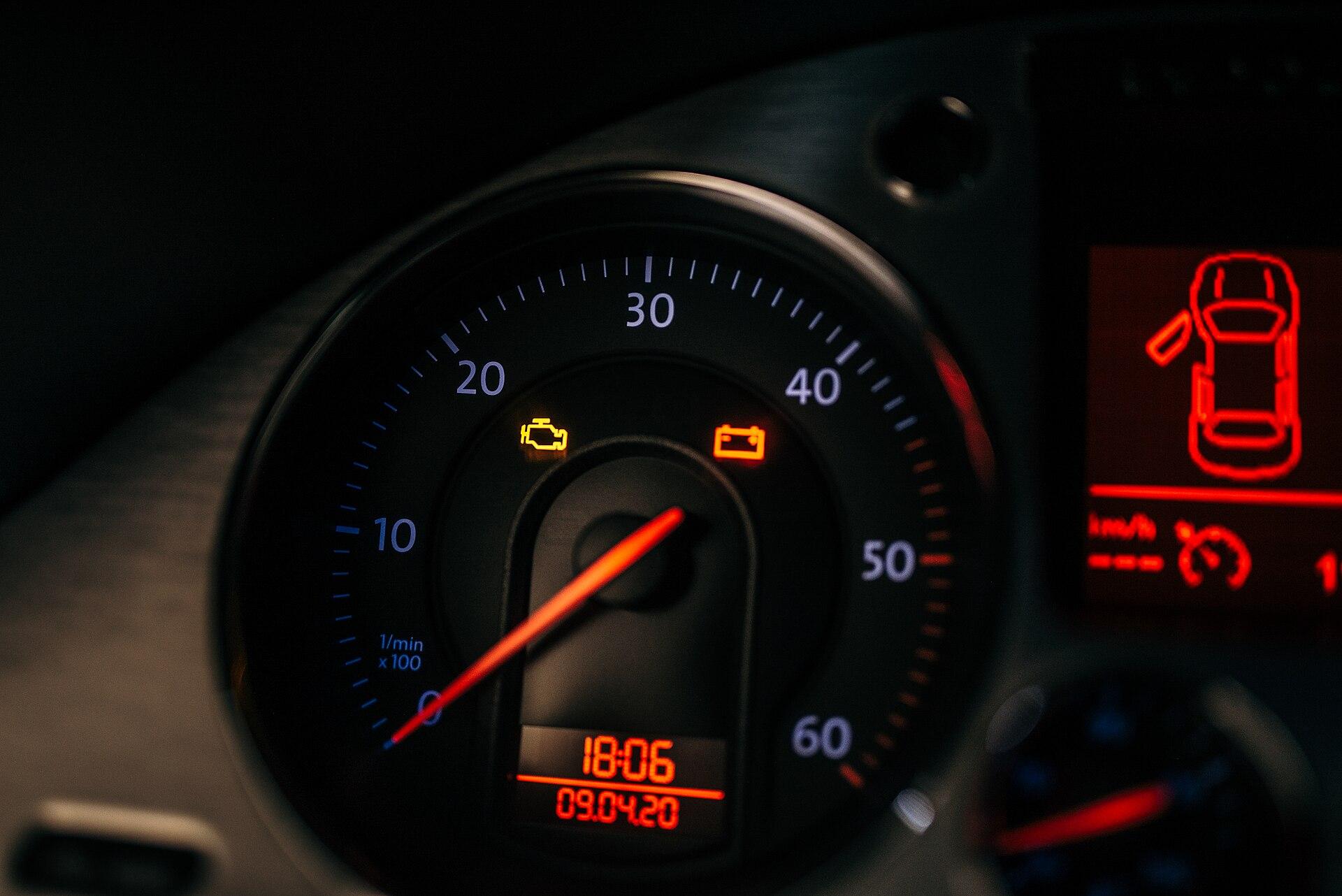
The amber engine-shaped symbol is the malfunction indicator lamp (MIL), required on all modern cars with OBD-II diagnostics. It lights when the engine or emissions control system detects a fault and stores a diagnostic trouble code.
A flashing MIL usually means an active misfire. Honda's manuals, for example, advise driving at 31 mph (50 km/h) or less to a dealer if it blinks again after a restart, and Nissan's warn that a misfire may damage the emission control system.
Which Vehicles Show This Message?
| Make | Models, years and system name |
|---|---|
| Toyota | “Malfunction indicator lamp” (engine symbol, amber). |
| Ford | Engine symbol (“check engine/service engine soon”). |
| Honda | “Malfunction Indicator Lamp”; some models also show an emissions system message. |
| Nissan | “Malfunction Indicator Light (MIL)”. |
Possible Causes and Conditions
Loose or faulty fuel cap
An evaporative (EVAP) leak is a classic cause. The light can take several drives to clear after tightening.
Misfire
Worn spark plugs or a failed ignition coil. Causes the flashing light.
Sensors
Oxygen sensors, mass airflow sensor and others.
Catalytic converter or EVAP valves
Catalyst efficiency codes, purge or vent valve faults.
What Should You Do?
- Flashing: ease off, avoid hard acceleration and towing, and drive gently to a shop or call for help.
- Steady: check the fuel cap is tight and clicked, and notice any change in how the engine runs.
- Have the code read. Many parts stores and shops do it, or use an inexpensive OBD-II reader.
- If the light comes with low oil pressure, overheating, loss of power or a burning smell, stop safely.
Related Alerts and Differences
| Message | How it differs |
|---|---|
| Low oil pressure light | Red oil can. Stop the engine. |
| Maintenance Required / Maintenance Minder | A service reminder, not a fault. |
| Reduced Engine Power | The car limits power to protect itself; get it checked promptly. |
Official Manuals, Bulletins and Recall Resources
Message wording and the right response can change between model years. Check the warning-message section of the owner's manual for your exact vehicle, and run your VIN through the NHTSA recall lookup (see how to check recalls with your VIN).
- AAA: My check engine light is on, what do I do?acg.aaa.com/connect/blogs/4c/auto/my-check-engine-light-is-on-what-do-i-do
- Toyota owner's manualstoyota.com/owners/warranty-owners-manuals
- Ford owner manuals (by year/model or VIN)ford.com/support/owner-manuals
- Honda owner's manualsowners.honda.com/vehicle-information/manuals
- Nissan manuals & guidesnissanusa.com/owners/ownership/manuals-guides.html
Check Engine Light: FAQs
Can a loose gas cap trigger the check engine light?
Yes. An EVAP leak from a loose cap is a common cause. Tighten it; the light may take several drive cycles to go out.
Is a flashing check engine light worse than a steady one?
Yes. Flashing indicates a misfire that can overheat and damage the catalytic converter. Reduce speed and get it checked right away.
Will my car pass inspection with the light on?
Generally not. Most emissions inspections fail a car with the check engine light lit.
Last reviewed November 2026. Written from manufacturer owner's manuals and NHTSA data; see our editorial policy.